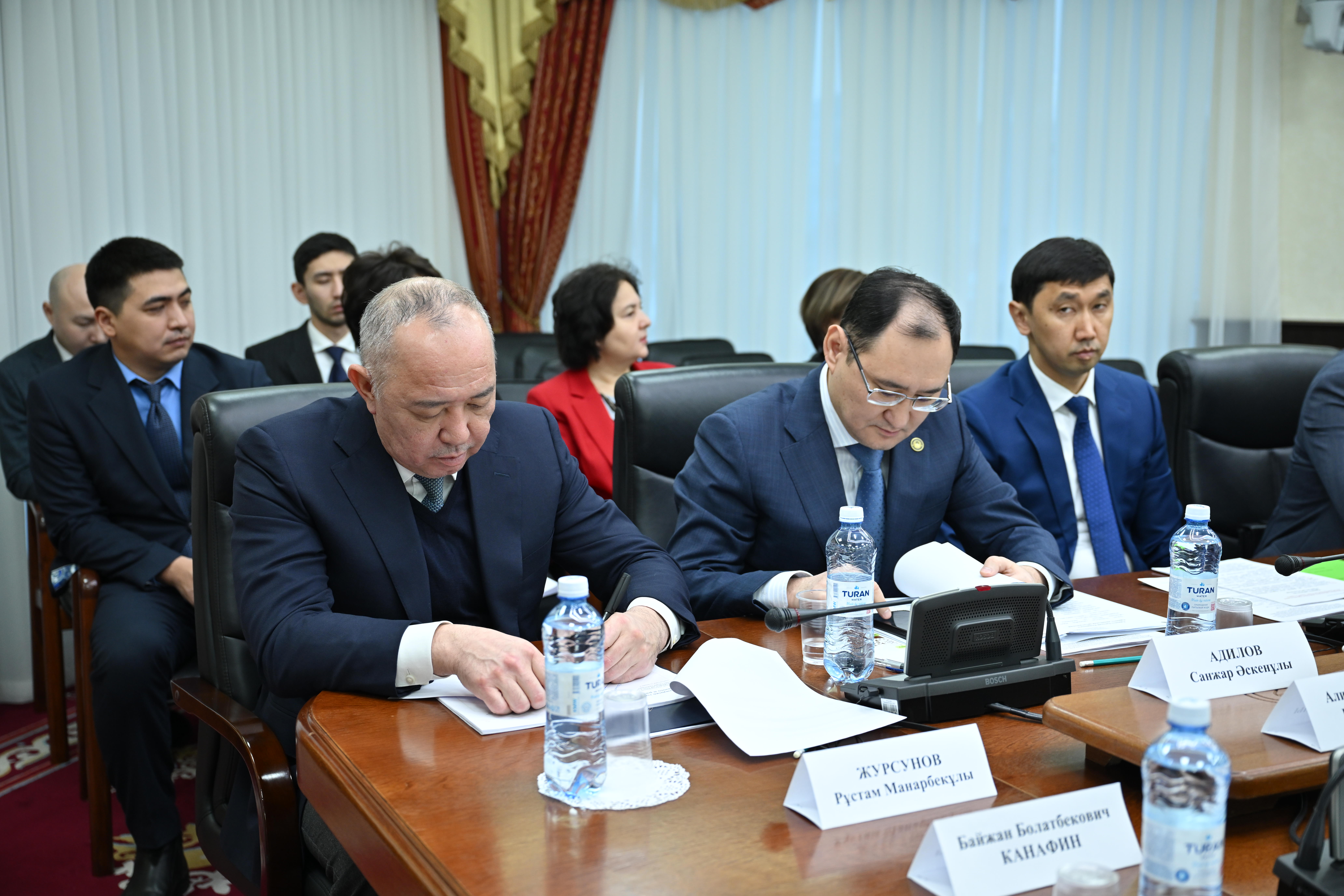
On December 9, Rustam Zhursunov, Chairman of the Board of the Association of Investors of Kazakhstan, participated in a meeting with the Commissioner for the Protection of Entrepreneurs’ Rights of Kazakhstan as part of the implementation of the Address of the Head of State on the topic: “Rule of Law as the Foundation for Improving the Investment Climate and Protecting the Rights of Investors and Entrepreneurs.”
The meeting was attended by Beknazarov N., Aldashev S., Bolgert E. and other members of the Senate committees, as well as Nurov K., Business Ombudsman, Kuantyrov A., Deputy Minister of Foreign Affairs, and others.
Let us briefly highlight the main points of the presentation regarding the current investment situation and recommendations for further improving the country’s business climate.
Despite the global slowdown in FDI inflows, Kazakhstan demonstrates positive dynamics. The large-scale construction phase in the oil and gas sector is coming to an end, and it is clear that in the current situation it is necessary to restart the investment cycle.
In the first quarter of 2025, gross inflows of foreign direct investment (FDI) reached $6.6 billion, while net inflows returned to positive territory, amounting to $2.4 billion. There is a steady shift of investment flows toward non-extractive sectors. Significant growth was recorded in the information and communication sector (almost 10-fold), as well as record figures in trade (17%) and manufacturing (16%). Small and medium-sized businesses have become a key participant in the investment process, accounting for 58% of investments in fixed capital. There is also a trend of increasing public investment up to 23%.
Particular attention was paid to the issue of reinvestment. In 2015, reinvestments accounted for 35%. If we recall 2010 — it was 47%, while in the first quarter of the current year the figure stands at 19%. This indicator is very important because it shows whether businesses believe in the future. Existing investors are carriers of valuable expertise and long-term trust in the jurisdiction.
To assess the investment climate, the Association of Investors of Kazakhstan conducted a survey of 109 large companies in the country. Almost half of the respondents (46%) assess the state of their industry as stagnation or decline. Moreover, nearly one-third (27%) directly describe the investment climate in the country as “unfavorable,” indicating the presence of systemic problems affecting business activity.
When analyzing specific barriers, businesses clearly distinguish between external and internal challenges. The main external threats identified by entrepreneurs are macroeconomic instability (62%) and excessive state regulation (46%). At the same time, the most acute internal problem hindering development is personnel issues (54%).
A problematic area of the investment climate is the state of legislation and the regulatory environment. More than half of the companies (52%) consider the legislative framework unstable and unpredictable. This is compounded by the low quality of the regulatory system itself, noted by more than a third of respondents (38%). These problems have direct negative consequences for operational activities: 46% of companies reported a slowdown in business processes due to bureaucracy, and 35% noted that management is forced to divert attention from business development issues to interaction with government agencies.
Zhursunov emphasized the advisability of strengthening legal guarantees and continuing comprehensive legal reform, which would send a powerful signal to investors about the inviolability of their rights. A comprehensive, deep, and scientifically grounded legal reform capable of restoring the integrity and functionality of the state’s legal system can return the necessary momentum to the economy for sustainable and diversified growth.
The ultimate goal of legal reform is to create a modern, stable, and fair legal environment that ensures effective protection of rights, stimulates economic growth, and guarantees predictability for all market participants.
The key directions of this reform should include strengthening the fundamental institutions of law, humanization and decriminalization of economic relations, elimination of administrative repression against business, and modernization of key branches of legislation.
Author: the Association of Investors of Kazakhstan
| Date: 09.12.2025
Source: the Association of Investors of Kazakhstan
Source: the Association of Investors of Kazakhstan
Views: 280